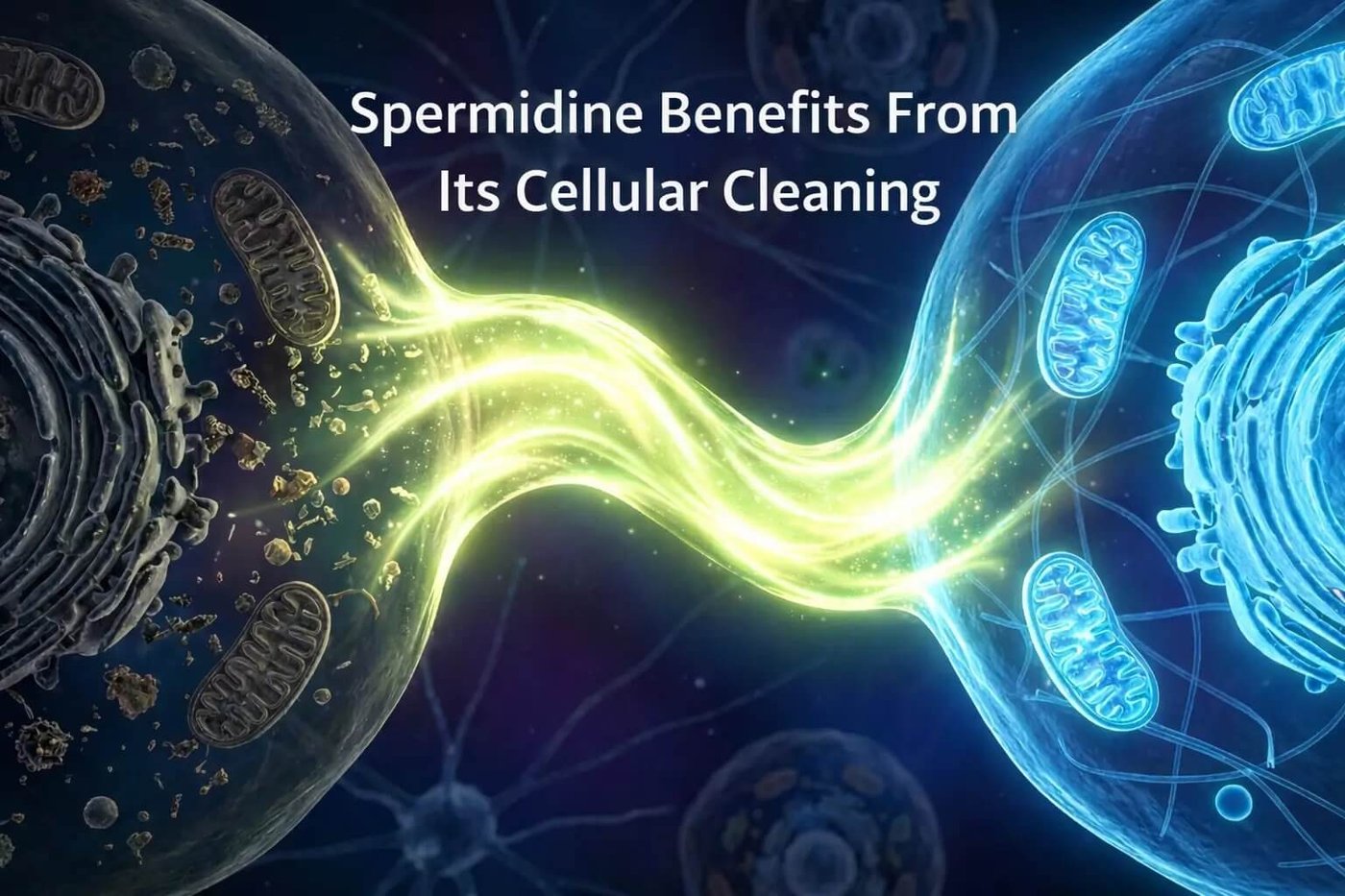
Spermidine is a naturally occurring polyamine that triggers autophagy, the body's cellular cleanup and recycling system. Human clinical trials show it supports cognitive function in older adults, and population studies link higher spermidine intake to better cardiovascular health. A spermidine supplement delivers standardized doses that would be nearly impossible to achieve through diet alone.
Quick Answer: Spermidine at a Glance
- What it is: A polyamine found in all living cells that declines significantly with age
- Primary action: Induces autophagy (cellular cleanup) by inhibiting EP300 and suppressing mTOR
- Clinical dose: 1.2mg to 3.3mg of pure spermidine daily
- Timeline: Three to six months for cognitive and cardiovascular benefits in clinical trials
- Safety: Well-tolerated in human trials lasting up to twelve months
- Best sources: Natto (fermented soybeans), aged cheese, or standardized supplements
Published: January 15, 2024 | Last Updated: April 3, 2025
Spermidine Benefits: The Complete Science Guide for Health & Longevity
Yes, the name sounds like something a frat boy discovered by accident. But spermidine is actually one of the most studied longevity molecules on Earth, found in every living cell from bacteria to humans. Your body already makes it. The problem? Production crashes as you age, leaving your cells struggling to maintain themselves.
Imagine your body as a massive, complex city. When you are young, the garbage trucks run on schedule. Street sweepers clean every avenue before dawn. Repair crews patch potholes before anyone trips. As you get older, city management slacks off. Garbage piles up on corners. Potholes become craters. The once-gleaming infrastructure starts falling apart. This is exactly what happens inside your cells as you age, and it is exactly what spermidine helps reverse.
Scientists spent decades searching for ways to restore cellular maintenance. They tested exotic berries from remote rainforests. Complex pharmaceuticals with unpronounceable names. Thousands of compounds extracted from everything imaginable. One of the most promising candidates turned out to be this humble molecule first spotted under a rudimentary microscope in 1678 by the father of microbiology himself.
This guide covers everything you need to know about spermidine supplements: the human clinical trials that demonstrate real benefits, the biological mechanisms that explain how it works, the spermidine benefits for brain health and cardiovascular function, practical dosing protocols based on actual research, and why the quality of your supplement matters more than you might expect. Get comfortable. We are going deep into the science.
Table of Contents
Table of Contents
- What Is Spermidine? (And Why the Weird Name)
- How Spermidine Works: Your Cells Have a Roomba
- Spermidine and Brain Health: What the Research Shows
- Cardiovascular Benefits of Spermidine Supplements
- Immune System Rejuvenation and Spermidine
- Spermidine for Hair Growth: Human Clinical Data
- Spermidine and Intermittent Fasting: A Powerful Combination
- Spermidine Before and After: Setting Realistic Expectations
- Spermidine Dosage: How Much Should You Take?
- Is Spermidine Safe? Complete Safety Review
- Spermidine Foods List: Dietary Sources
- Spermidine vs NMN: Which Is Better for You?
- How Long Does Spermidine Take to Work?
- Best Spermidine Supplement: Why Quality Matters
- How We Research: Our Methodology
- TA-65 + Spermidine Stack: Complementary Longevity Pathways
- Frequently Asked Questions About Spermidine
- The Bottom Line on Spermidine Supplements
What Is Spermidine? (And Why the Weird Name)
Let us get the awkward part out of the way immediately. In 1678, Antonie van Leeuwenhoek, the father of microbiology, was peering at various biological samples through his newly invented microscope. He noticed peculiar crystalline structures in human seminal fluid. Scientists later named the compound spermidine, which sounds like something you would find in a fraternity basement but is actually present in literally every living organism on this planet. Bacteria have it. Plants have it. Your cells are absolutely loaded with it.
Spermidine belongs to a family of molecules called polyamines, organic compounds characterized by multiple amino groups in their structure. These molecules are ancient in evolutionary terms. Life on Earth has been producing polyamines for billions of years because they serve absolutely critical functions that cannot be replaced by anything else.
In your body, spermidine does several essential jobs. It stabilizes DNA structure, helping maintain genomic integrity during cell division. It assists in transcribing RNA, the molecular messenger that carries genetic instructions to the protein-making machinery. It regulates cell growth, proliferation, and programmed cell death. You quite literally cannot survive without adequate spermidine. Every cell in your body requires it to function normally.
Your body acquires spermidine through three routes. First, you synthesize it internally through a biosynthetic pathway involving enzymes like ornithine decarboxylase. Second, your gut microbiome contributes a significant amount, with certain bacterial species producing polyamines as metabolic byproducts. Third, you absorb it from dietary sources. All three routes decline with age.
The longevity angle comes from a brutal biological fact that researchers have documented extensively: as you age, your spermidine levels plummet. This is not a gentle, graceful decline. It is a cliff. Three interconnected mechanisms drive this collapse:
- Enzyme slowdown: The enzymes responsible for synthesizing spermidine become progressively less active. Ornithine decarboxylase, the rate-limiting enzyme in polyamine synthesis, shows decreased activity in aged tissues. Your internal production line slows down.
- Microbiome shift: The composition of your gut bacteria changes dramatically with age. The species that efficiently produce polyamines die off or get displaced by other organisms. Your bacterial suppliers go out of business.
- Uptake failure: The cellular transport mechanisms that pull spermidine into cells lose efficiency. Even when spermidine is present in your bloodstream, aged cells struggle to absorb it. The loading docks stop working properly.
Why does this matter so profoundly? Polyamines act as structural scaffolding for your genetic material. They interact electrostatically with the negatively charged phosphate backbone of DNA, helping maintain proper chromatin structure and gene accessibility. When the scaffolding weakens, the building starts to sag. Gene expression becomes dysregulated. Cells lose their ability to respond appropriately to signals. The whole system degrades.
This decline in spermidine levels correlates strongly with the hallmarks of aging that researchers have identified: genomic instability, epigenetic alterations, loss of proteostasis, cellular senescence, and mitochondrial dysfunction. Restoring these levels through supplementation is now a primary target for longevity researchers worldwide.
How Spermidine Works: Your Cells Have a Roomba
The most important and most studied mechanism of action for spermidine is a cellular process called autophagy. The word comes from the Greek for "self-eating," which sounds absolutely terrifying until you understand what it actually means. Autophagy is not cells cannibalizing themselves destructively. It is the most important cellular maintenance and quality control system in your body.
Think of it this way: your cells have a built-in Roomba. This robotic vacuum cruises around the cellular interior, scanning for problems. Broken proteins that misfolded during synthesis. Damaged mitochondria leaking harmful reactive oxygen species. Worn-out organelles that no longer function properly. Accumulated junk that interferes with normal operations. When the Roomba finds debris, it sweeps it up, wraps it in a membrane structure called an autophagosome, delivers it to a lysosome for digestion, and recycles the raw materials to build new, healthy cellular components.
When you are young, the Roomba runs constantly. Your cells stay clean. Damaged components get removed before they cause problems. The cellular environment remains pristine and functional.
When you get older, the Roomba starts forgetting to charge its battery. It gets stuck in corners. The dust bunnies multiply. Cellular debris accumulates. Dysfunctional proteins aggregate into toxic clumps. Damaged mitochondria pump out oxidative stress. The pristine cellular environment becomes a cluttered mess that impairs every biological function.
Spermidine turns the Roomba back on.
It accomplishes this through several interconnected molecular mechanisms that researchers have mapped in exquisite detail over the past two decades.
EP300 inhibition: Spermidine inhibits an enzyme called EP300 (also known as p300), a histone acetyltransferase that plays a complex role in regulating gene expression and cellular processes. Normally, EP300 acetylates key proteins involved in autophagy, which tends to suppress their activity. By blocking EP300, spermidine allows these autophagy proteins to remain deacetylated and active. The result is a cascade of cellular signals that wake up the dormant autophagy machinery and get it running again.
mTOR suppression: The mechanistic target of rapamycin (mTOR) is a master regulator that controls whether cells prioritize growth or repair. When mTOR activity is high, cells focus on growing and dividing. When mTOR is suppressed, cells shift into maintenance and repair mode, activating autophagy and other quality control processes. Spermidine gently pushes mTOR down, signaling cells to focus on housekeeping rather than unchecked proliferation. This is significant because chronic mTOR overactivation is associated with accelerated aging and increased disease risk.
AMPK activation: AMP-activated protein kinase (AMPK) is the cellular energy sensor, a molecular fuel gauge that monitors the ratio of AMP to ATP. When energy is scarce, AMPK activates and triggers a constellation of responses designed to restore energy balance. These include increased fatty acid oxidation, enhanced mitochondrial biogenesis, improved insulin sensitivity, and critically, activation of autophagy. Spermidine activates AMPK, mimicking the metabolic effects of fasting and exercise.
This is why spermidine is often called a "caloric restriction mimetic." Caloric restriction, the practice of reducing calorie intake significantly below normal levels, is one of the most robust interventions for extending lifespan across species from yeast to primates. The problem is that actual caloric restriction requires eating dramatically less food, which most people find unsustainable and unpleasant. A caloric restriction mimetic tricks your body into activating the same beneficial pathways without the actual starving part. You get the longevity benefits of eating less without actually eating less. For most people, that is the only way they would ever actually stick with it.
A 2025 rat study (Zhao et al., PMID 40169099) found spermidine reduced neuroinflammation and neuronal injury in aged animals by restoring autophagic activity to levels observed in younger subjects. The aged rats supplemented with spermidine showed metabolic profiles resembling those of much younger animals.
The effects are not limited to autophagy. Spermidine also influences epigenetic regulation, helping maintain appropriate patterns of gene expression that tend to drift as we age. It supports mitochondrial function, helping cells maintain their energy production capacity. It modulates inflammation, helping prevent the chronic, low-grade inflammatory state that characterizes aging tissues. All these mechanisms work together to maintain cellular health and function.
Spermidine and Brain Health: What the Research Shows
Your brain is metabolically the most demanding organ in your body, consuming roughly 20 percent of your total energy output while representing only about 2 percent of your body weight. This intense metabolic activity generates massive amounts of waste products that must be continuously cleared. If that waste accumulates, it forms toxic aggregates and deposits. This is where spermidine benefits become particularly interesting for anyone concerned about cognitive health and brain aging.
First, the logistical good news: spermidine crosses the blood-brain barrier. This highly selective security checkpoint exists specifically to keep toxins, pathogens, and foreign substances out of your brain tissue. The blood-brain barrier is remarkably effective at its job, which unfortunately means it also blocks most supplements and drugs from reaching brain tissue. You can swallow compounds all day, but if they cannot cross the blood-brain barrier, they will never affect your neurons. Spermidine passes through, giving it direct access to brain tissue where it can exert its effects.
Human clinical trials show early promise for cognitive function. The SmartAge trial is perhaps the most frequently cited study in this area. Researchers recruited older adults who reported subjective cognitive decline, meaning they noticed their memory and mental sharpness slipping even though they did not yet have diagnosed dementia. Participants received either a spermidine-rich wheat germ extract or a placebo for several months. The spermidine group showed significant improvements in memory performance compared to placebo. The timeline for these cognitive benefits was approximately three to six months of consistent supplementation.
A study by Hofer 2024 (PMID 39187679) investigated spermidine's effects on cognitive function in elderly individuals using rigorous neuropsychological assessments. The results demonstrated improvements in both memory and executive function, the higher-order cognitive processes involved in planning, decision-making, and mental flexibility. Researchers attributed these benefits to enhanced synaptic plasticity, the brain's ability to strengthen and reorganize neural connections, and overall improvements in neuronal health mediated by spermidine's autophagic and epigenetic activities.
The Zhao 2025 study examined vascular dementia specifically, the second most common cause of dementia after Alzheimer's disease. Vascular dementia occurs when blood flow to the brain is reduced by damaged or blocked blood vessels, starving neurons of the oxygen and nutrients they need. The researchers used advanced imaging and cognitive assessments to track the impact of polyamines on brain vascular health. They found that maintaining higher systemic spermidine levels correlated with better vascular health in the brain and improved performance on cognitive tests.
Important caveat on Alzheimer's disease and other dementias: We must be scientifically precise here. In animal models, spermidine administration significantly reduced amyloid plaque burden, the protein aggregates that accumulate in Alzheimer's brains, and improved maze navigation in mice genetically engineered to develop Alzheimer's pathology. The results in these animal models are genuinely impressive. However, we cannot claim that spermidine treats, cures, prevents, or diagnoses Alzheimer's disease or any other neurodegenerative condition in humans. The biological mechanisms are heavily conserved across species, but mouse brains are not human brains. Human clinical trials specifically for Alzheimer's disease modification are ongoing, but we do not yet have the data to make disease claims. What we can say accurately: the brain clears cellular junk via autophagy, spermidine activates autophagy, and maintaining this cleanup process appears important for cognitive health.
The neuroprotective mechanisms extend beyond simple cleanup. Spermidine supports mitochondrial function in neurons, helping them maintain the enormous energy production capacity they require. It modulates neuroinflammation, the chronic inflammatory state in brain tissue that contributes to neurodegeneration. It influences neurotransmitter systems, potentially affecting mood, motivation, and cognitive processing. The compound's effects on brain health are multifaceted and involve numerous interconnected pathways.
Cardiovascular Benefits of Spermidine Supplements
Heart disease remains the leading global killer, claiming more lives than any other cause. Your cardiovascular system is essentially a sophisticated plumbing network, with the heart serving as a tireless pump pushing blood through an elaborate maze of vessels. Like all plumbing systems, the pipes can stiffen, narrow, and clog over time through processes like atherosclerosis. Maintaining vascular health is fundamental to avoiding heart attacks, strokes, and the slow decline of cardiovascular function that degrades quality of life.
Human population studies suggest spermidine protects cardiovascular health. The landmark Kiechl cardiovascular study (Eisenberg 2016, PMID 27841876) followed a large population over many years, tracking both dietary spermidine intake and cardiovascular outcomes. The researchers found a strong inverse correlation between spermidine consumption and cardiovascular disease risk. People who consumed more spermidine from dietary sources had significantly lower blood pressure, fewer cardiovascular events like heart attacks and strokes, and better overall cardiovascular health metrics. This association remained significant even after controlling for other dietary and lifestyle factors.
The biological mechanisms underlying these benefits make intuitive sense given what we know about spermidine's effects on cellular function. As blood vessels age, the endothelial cells lining their interior walls become dysfunctional. These cells normally produce nitric oxide, a molecule that signals the smooth muscle in vessel walls to relax, allowing blood to flow freely. Dysfunctional endothelium produces less nitric oxide, leading to stiffer, less responsive vessels and higher blood pressure. Spermidine-induced autophagy helps clear the damaged cellular components that impair endothelial function, potentially restoring the vessel's ability to dilate properly and regulate blood flow.
The POLYCAD trial provided additional evidence by specifically examining the relationship between polyamine levels and coronary artery disease. Researchers found an inverse relationship between spermidine levels and arterial stiffness, a key measure of vascular health. People with higher spermidine levels had more flexible, resilient arteries that could accommodate the pulsatile flow of blood without sustaining damage.
A striking finding from clinical research: patients with severe heart failure universally show depleted systemic spermidine levels. The heart muscle is the most energy-demanding tissue in your body, beating roughly 100,000 times per day without rest. This requires a massive, uninterrupted supply of ATP from mitochondria. When cardiac mitochondria become dysfunctional, heart muscle cells cannot generate adequate power, and contractile function suffers. Autophagy serves as the quality control mechanism that clears old, damaged mitochondria and makes room for fresh, efficient ones. Without adequate spermidine to drive this process, the mitochondrial population degrades and cardiac function declines.
The Madeo 2018 review (PMID 29378137) provides a detailed analysis of how spermidine-induced autophagy preserves cardiac structure and function across multiple research studies. The evidence suggests that maintaining adequate spermidine levels throughout life may help preserve cardiovascular health and potentially extend the healthy lifespan of this critical organ system.
It is worth noting that cardiovascular benefits likely take time to manifest. Blood pressure improvements, arterial flexibility changes, and reductions in cardiovascular event risk are not overnight phenomena. The population studies showing benefits tracked subjects over years, not weeks. Anyone hoping to support cardiovascular health with spermidine should commit to consistent, long-term supplementation rather than expecting immediate dramatic changes.
Immune System Rejuvenation and Spermidine
As you age, your immune system undergoes a process called immunosenescence, the gradual deterioration of immune function that leaves older individuals more susceptible to infections, less responsive to vaccines, and more prone to inflammatory dysregulation. Understanding this process and potential interventions has become increasingly important as populations age worldwide.
A key player in immune defense is the CD8+ cytotoxic T cell, the assassin of the immune system that directly destroys infected cells and cancer cells. These cells patrol your body constantly, identifying threats and eliminating them before they cause serious harm. Effective CD8+ T cell function requires enormous metabolic flexibility, the ability to rapidly shift between different energy production modes depending on circumstances.
With age, CD8+ T cells lose this metabolic flexibility. Their mitochondria become dysfunctional. They cannot switch gears quickly enough to mount an effective response when needed. The cells become sluggish, exhausted, and ineffective. This is why elderly individuals often respond poorly to vaccines: their T cells simply cannot mount the vigorous response required to build lasting immunity.
Research demonstrates that spermidine can rejuvenate these exhausted T cells by restoring their mitochondrial function and metabolic capacity. In studies of elderly populations, enhanced polyamine levels significantly improved vaccine response rates. The T cells regained their ability to proliferate rapidly, produce appropriate cytokines, and mount effective immune responses. This has obvious implications for protecting older adults against infectious diseases.
Preclinical data on cancer immunotherapy is particularly intriguing. Checkpoint inhibitors like anti-PD-1 and anti-CTLA-4 antibodies have revolutionized cancer treatment by releasing the brakes on T cells, allowing them to attack tumors more effectively. However, these drugs only work if the patient's T cells are metabolically active enough to sustain an anti-tumor response. In animal models, spermidine enhanced the efficacy of checkpoint immunotherapy, potentially by restoring T cell metabolic function. This remains preclinical research, and we cannot yet make claims about cancer treatment in humans, but the oncology community is closely monitoring developments in this area.
The Schwarz 2018 study (PMID 29559336) demonstrated that dietary spermidine supplementation extended lifespan in model organisms primarily through autophagy induction and mitochondrial preservation. These same mechanisms that extend lifespan also support immune function. Healthy mitochondria power effective immune responses. Efficient autophagy clears damaged cellular components that would otherwise impair immune cell function.
Beyond T cells, spermidine may influence other aspects of immune function. The compound affects macrophage polarization, potentially promoting anti-inflammatory phenotypes over pro-inflammatory ones. It may influence B cell function and antibody production. The full scope of spermidine's immunomodulatory effects is still being mapped, but early evidence suggests broad support for healthy immune function throughout the aging process.
Spermidine for Hair Growth: Human Clinical Data
This is one area where the evidence base includes direct human research rather than relying primarily on animal models. Hair follicle biology has been studied extensively using human tissue, and spermidine's effects on hair growth have been documented in both ex vivo studies using human follicles and clinical trials in human subjects.
The Ramot 2011 study (PMID 21772024) examined spermidine's effects on human hair follicles maintained in organ culture, a system that preserves the complex structure and function of the follicle outside the body. The results showed that spermidine significantly prolonged the anagen phase, the active growth phase of the hair cycle when the follicle is producing new hair shaft material. Longer anagen means more time for hair to grow before the follicle enters the regression and resting phases that culminate in shedding.
The mechanism involves spermidine's effects on the keratinocytes that make up the hair follicle. These rapidly dividing cells require abundant polyamines to support their intense metabolic activity. Spermidine also promotes epithelial stem cell function, potentially supporting the follicular stem cell populations that maintain hair-producing capacity over time.
A subsequent clinical trial by Rinaldi and colleagues (2017) tested topical spermidine application on participants experiencing hair thinning. The results demonstrated measurable improvements:
- Increased hair density, meaning more hairs per unit area of scalp
- Thicker hair shafts, indicating more robust production during the anagen phase
- Reduced shedding, reflecting longer anagen and slower transition to the resting phase
Setting realistic expectations: Spermidine will not resurrect completely dead or permanently dormant follicles. Once a follicle has been destroyed by scarring or has undergone complete miniaturization, no supplement can bring it back. Hair transplantation remains the only option for restoring hair in those areas. However, for existing follicles that are struggling but not yet dead, spermidine can extend their productive phase and improve the quality of the hair they produce. Users typically notice reduced shedding at the one to two month mark, with visible improvements in hair thickness and density by three to four months of consistent use.
The hair growth benefits illustrate an important point about spermidine: its effects on rapidly dividing cell populations are particularly pronounced. Hair follicles, gut epithelium, and immune cells all share high turnover rates and corresponding high demands for polyamines. Supporting these populations with adequate spermidine may be especially beneficial for maintaining function in these tissues.
Spermidine and Intermittent Fasting: A Powerful Combination
If you already practice intermittent fasting, spermidine becomes your ultimate cellular ally. Both interventions activate the same fundamental longevity pathways, and combining them creates synergistic effects that exceed what either achieves alone.
The mechanistic overlap is striking:
- Fasting naturally activates AMPK, the cellular energy sensor
- Spermidine activates AMPK through a different mechanism
- Fasting naturally suppresses mTOR, the growth-vs-repair switch
- Spermidine suppresses mTOR through a different mechanism
- Both fasting and spermidine independently induce autophagy
- Double the stimulus means enhanced autophagy activation
Taking spermidine during your fasting window stacks these effects. Your overnight fast has already shifted your metabolism toward repair mode. Adding spermidine amplifies that signal, pushing autophagy activation even higher than either intervention achieves alone. This is not speculation; the molecular pathways are well characterized and the combined effects are predictable from first principles.
Does spermidine break a fast? No. Spermidine contains negligible calories and does not trigger insulin release or mTOR activation. It actually enhances the metabolic state of fasting rather than disrupting it. You can take spermidine during your fasting window with confidence that you are amplifying rather than undermining your fast.
Practical protocol for combining spermidine and fasting:
Take spermidine in the morning during your fasting period, when AMPK is already activated and mTOR is already suppressed. If your eating window runs from noon to 8 PM, take spermidine around 8 or 9 AM. This stacks the autophagy activation from your overnight fast with the additional spermidine-mediated boost.
Some longevity researchers call this approach "fasting mimicry on top of actual fasting." You are already getting benefits from the fast itself. The spermidine provides compounding returns on cellular cleanup by activating autophagy through additional pathways that fasting alone does not maximally engage.
For those practicing longer fasts of 24 hours or more, spermidine can be taken at any point during the fast. The longer your fast runs, the more depleted your cells become of nutrients, and the more aggressively autophagy is activated. Spermidine during an extended fast simply adds to an already robust autophagic response.
Spermidine Before and After: Setting Realistic Expectations
This is not caffeine. You will not swallow a capsule and feel a surge of energy 30 minutes later. Spermidine works on deep cellular timelines, rebuilding and maintaining biological infrastructure rather than providing acute, perceptible effects. Understanding the realistic timeline helps set appropriate expectations and prevents premature abandonment of a protocol that simply needs more time.
Week 1-2: Most users notice very little during this initial phase. Some report subtle improvements in sleep quality, perhaps falling asleep more easily or waking feeling more refreshed. Others notice slight improvements in digestion or bowel regularity. The autophagy machinery is activating at the molecular level, but the effects have not yet accumulated enough to produce obvious symptoms. Cellular cleanup is underway, but the visible benefits are still subclinical.
Week 4-8: Physical markers typically start appearing during this window. The most commonly reported early benefits involve tissues with high turnover rates and corresponding high polyamine demands. Nails often become stronger and less prone to breaking or peeling. Hair shedding often decreases noticeably, with less hair accumulating in the shower drain or hairbrush. Some users report subtle improvements in skin texture or elasticity. Baseline energy levels may increase modestly, though this is not universal.
Month 3-6: This is when the major benefits documented in clinical trials typically emerge. The SmartAge cognitive trial ran for three months. Cardiovascular studies typically span six months or longer. The structural and functional improvements that spermidine promotes simply take time to manifest at the tissue and organ level. Cognitive improvements, cardiovascular benefits, and systemic anti-aging effects require months of consistent cellular maintenance to become apparent.
What to track for documenting your own before and after:
- Bloodwork: Get baseline inflammatory markers like high-sensitivity C-reactive protein (hs-CRP) and complete lipid panels before starting supplementation. Retest at the six-month mark to assess changes. These objective measures provide data beyond subjective perception.
- Cognitive tests: Apps and online platforms like Cambridge Brain Sciences, Lumosity, or BrainHQ can track memory, processing speed, attention, and executive function over time. Take baseline assessments before starting and retest periodically.
- Physical markers: Photograph your hair at consistent angles and lighting. Note nail condition. Document skin appearance. These records allow objective comparison over time.
- Optional advanced testing: Telomere length testing before and after provides deeper data for those wanting thorough tracking. Biological age calculators based on methylation patterns offer another metric for assessing changes.
If you want to see real results and fairly evaluate whether spermidine works for you, commit to a six-month protocol with objective measurements. Anything less is just dipping your toe in the water and abandoning the experiment before the effects have time to manifest.
Spermidine Dosage: How Much Should You Take?
Supplement labels can be deeply misleading, and the spermidine market is no exception. A product might prominently advertise "500mg wheat germ extract" but contain minimal actual spermidine. Understanding what the research actually used, and how to interpret supplement labels, is essential for effective supplementation.
Clinical trial doses: The human trials demonstrating cognitive and cardiovascular benefits used 1.2mg to 3.3mg of pure, standardized spermidine daily. Yes, milligrams. This is not a typo. Pure spermidine is highly potent and exerts significant biological effects at doses that seem tiny compared to many other supplements.
The confusion arises because most supplements are not pure spermidine. They are wheat germ extracts or other plant-based preparations that contain spermidine along with many other compounds. A "500mg wheat germ extract" might contain only a few milligrams of actual spermidine, depending on the source material and extraction process.
The math matters significantly. A standardized wheat germ extract like Rapymine (25mg) is specifically designed to deliver clinical threshold levels of active polyamines. The extraction and concentration process ensures consistent potency. This is fundamentally different from simply grinding up wheat germ into powder and stuffing it into capsules, which would deliver variable and often inadequate amounts of active compound.
Timing optimization: Take spermidine when insulin levels are low to maximize AMPK activation and autophagy induction. High insulin suppresses AMPK and activates mTOR, working against the very pathways you are trying to enhance. Optimal timing options include:
- At the end of an overnight or extended fast, before breaking the fast
- Before bed, at least two hours after your last meal when insulin has dropped
- First thing in the morning before eating anything
Avoid taking spermidine immediately after a large meal or alongside high-carbohydrate foods that spike insulin. The timing is not about absorption kinetics but about the metabolic state of your cells when the spermidine arrives.
Cycling considerations: Some longevity researchers and practitioners prefer a cycling approach, taking spermidine for five consecutive days followed by a two-day break. The rationale involves mimicking natural biological pulsing and potentially preventing desensitization of cellular pathways. However, the major human clinical trials used unbroken daily administration without cycling, and those trials demonstrated clear benefits. Both approaches are reasonable, and there is currently no strong evidence that one outperforms the other. Daily consistent use aligns with the clinical evidence; cycling is a theoretically motivated variation that some prefer.
Is Spermidine Safe? Complete Safety Review
Spermidine is well-tolerated in human clinical trials lasting up to twelve months. The Schwarz 2018 safety study (PMID 29559336) tracked participants taking spermidine supplements for a full year with rigorous safety monitoring. The conclusion was clear: no serious adverse events occurred that could be attributed to the supplementation.
This excellent safety profile makes biological sense when you consider what spermidine actually is. It is not a foreign pharmaceutical compound synthesized in a laboratory. It is not an exotic plant extract that your body has never encountered. Spermidine is a fundamental biological molecule that exists naturally in your body, in your food, and in every living organism on Earth. Your cells produce it constantly. Your gut bacteria produce it. You absorb it from virtually everything you eat. Your body knows exactly how to handle spermidine because it has been processing it your entire life.
Reported spermidine side effects in clinical research:
- Mild gastrointestinal distress in rare cases, typically transient and self-limiting
- No serious adverse events attributed to supplementation
- No significant drug interactions identified in published research
- No evidence of toxicity even at doses higher than typically used
Who should exercise caution or avoid spermidine supplements:
- Celiac disease or severe gluten sensitivity: Most commercial spermidine supplements derive from wheat germ. Even highly purified extracts may contain trace amounts of gluten proteins. For individuals with celiac disease or severe gluten intolerance, these trace amounts can trigger immune reactions and intestinal damage. If you fall into this category, seek specifically formulated wheat-free spermidine products that bypass this concern entirely.
- Pregnant or nursing women: No clinical trials have been conducted specifically on pregnant or nursing women. While there is no particular reason to expect problems, the absence of safety data in this population means caution is appropriate. The prudent approach is to avoid supplementation during pregnancy and nursing unless a physician specifically recommends otherwise.
- Anyone on immunosuppressive therapy: Because spermidine modulates immune function, individuals taking immunosuppressant drugs for organ transplant, autoimmune conditions, or other reasons should consult their physician before adding any immunomodulatory supplement to their regimen.
- Active cancer patients: While preclinical research suggests potential anti-cancer effects, the relationship between polyamines and cancer biology is complex. Some cancer cells have increased polyamine requirements. Consult with your oncologist before supplementing during active cancer treatment.
For the general adult population without these specific contraindications, spermidine has one of the cleanest safety profiles in the entire supplement market. This is not surprising given its fundamental role in normal biology and its presence in the human diet since the beginning of our species.
Spermidine Foods List: Dietary Sources
Can you get enough spermidine from food alone without supplementation? Technically, yes. Practically, good luck. The math makes dietary-only approaches extremely challenging for most people.
Top dietary sources of spermidine ranked by concentration:
- Natto (fermented soybeans): 7-10mg spermidine per 100 grams, by far the highest known concentration in any common food. This traditional Japanese breakfast food is made by fermenting soybeans with Bacillus subtilis bacteria, which dramatically increases the polyamine content.
- Aged cheddar and other aged cheeses: Moderate levels that increase with aging time as bacterial activity produces polyamines
- Mushrooms: Low to moderate levels depending on variety
- Green peas: Low levels
- Wheat germ: Variable depending on source and processing
- Whole grains: Low levels
- Various legumes: Generally low to moderate
Here is the practical problem. Natto has the highest concentration, but it presents serious palatability challenges for most Westerners. The texture resembles sticky, stringy spiderwebs. The aroma has been charitably compared to old gym socks and less charitably to things we will not mention. Most people who did not grow up eating natto find it genuinely difficult to consume, especially in the quantities needed to achieve clinical doses. Even if you somehow develop a taste for it, you would need to eat roughly 100-150 grams daily to hit the lower end of clinical dosing. That is a lot of fermented soybeans every single day for the rest of your life.
What about more palatable options like mushrooms? Let us do the math. You would need to consume approximately 50 cups of cooked mushrooms daily to match the spermidine doses used in clinical trials. Fifty cups. Daily. That is not a meal plan. That is a comedy sketch about someone who really, really likes mushrooms.
The caloric burden alone makes food-based approaches impractical. Getting clinical spermidine doses through diet means consuming enormous quantities of specific foods, which brings along massive amounts of calories, carbohydrates, fiber, and other components that you may not want in those quantities. Your digestive system would revolt long before you achieved adequate polyamine intake.
This is precisely why extraction and supplementation exist. By isolating and concentrating the active compound from large quantities of source material, supplements deliver therapeutic doses in a few capsules without requiring you to eat industrial quantities of fermented soybeans or become a mushroom consumption world record holder.
Spermidine vs NMN: Which Is Better for You?
Support autophagy with RevGenetics Spermidine.
Pure spermidine for longevity and cellular renewal.
Shop Now →The longevity community loves this debate, and forums are full of passionate arguments for one compound over the other. Here is the truth that resolves the debate: they do completely different things. They are not competitors. They are partners that address different aspects of cellular aging.
NMN (Nicotinamide Mononucleotide): This compound is a precursor to NAD+ (nicotinamide adenine dinucleotide), a coenzyme that participates in hundreds of metabolic reactions and is absolutely essential for cellular energy production. As you age, NAD+ levels decline substantially, potentially by 50% or more by middle age. This decline impairs mitochondrial function, reduces the activity of sirtuins (a family of proteins involved in longevity), and degrades cellular energy metabolism broadly. NMN supplementation aims to restore NAD+ levels, providing the raw fuel that mitochondria need to produce ATP. Think of NMN as the power supply, ensuring cells have adequate energy to perform their functions.
Spermidine: This compound activates autophagy and clears cellular debris. No matter how much energy your cells have, they will not function optimally if they are cluttered with broken proteins, damaged organelles, and accumulated junk. Spermidine turns on the cleanup crew, ensuring that cells remain pristine and functional regardless of their energy status.
Taking NMN without spermidine? You are pumping massive amounts of energy into dirty, cluttered cells. You are making a broken engine run faster, which might actually accelerate damage by powering dysfunctional processes.
Taking spermidine without NMN? You have beautifully clean, pristine cells that might lack the energy to run at peak capacity. The factory floor is spotless, but the power plant is running at half capacity.
The synergy argument: For truly optimal cellular health, you want both. Energy from NMN ensures cells can perform their functions. Cleanup from spermidine ensures those functions proceed in an optimal cellular environment. They target entirely different but complementary pathways. Many serious longevity enthusiasts also add resveratrol, which activates sirtuins, for a triple-pathway approach that addresses energy, cleanup, and longevity gene activation simultaneously.
If you absolutely must choose one based on your primary concerns:
- Constant fatigue, low energy, poor exercise recovery: Lean toward NMN, as energy metabolism may be your limiting factor
- Long-term health optimization, brain function, cellular repair, anti-aging focus: Lean toward spermidine, as autophagy and cellular cleanup may provide broader benefits
But really, they work best together. The question "spermidine vs NMN which is better" has the same answer as "food vs water which is better": you need both for optimal function.
How Long Does Spermidine Take to Work?
Cellular repair and maintenance operate on biological timelines, not the instant-gratification timelines of stimulants or pain relievers. Understanding this reality is essential for appropriate expectations and commitment to the protocol.
Weeks 1-2: Autophagy machinery activates at the molecular level. Cellular cleanup processes begin ramping up. Most users notice nothing obvious during this phase because the changes are occurring at scales too small to perceive directly. Some report better sleep quality or improved digestion, likely reflecting effects on gut epithelium turnover. But many people feel no different whatsoever, which is normal and expected.
Weeks 4-8: Physical markers begin emerging as cellular improvements accumulate into tissue-level changes. Nails often become stronger and more resilient. Hair shedding frequently decreases as follicles spend more time in the anagen growth phase. Some users report subtle improvements in skin appearance or baseline energy levels. These changes vary considerably between individuals based on starting condition, dose, and biological variability.
Months 3-6: This is the clinical trial timeframe, when the significant benefits documented in research typically emerge. The SmartAge cognitive trial demonstrated memory improvements at three months. Cardiovascular studies showing meaningful changes in vascular function and disease risk typically span six months or longer. Structural and functional improvements in organs and tissues simply require this much time to accumulate and manifest.
Patience is not optional here. If you want to properly evaluate whether spermidine works for you personally, commit to six months of consistent daily use with objective measurements before and after. Anything less amounts to abandoning an experiment before collecting meaningful data. The cellular processes you are trying to support do not operate on two-week timelines regardless of how much modern culture has conditioned us to expect instant results.
Best Spermidine Supplement: Why Quality Matters
The supplement market floods Amazon and retail shelves with cheap, unverified products in every category, and spermidine is no exception. You can find spermidine supplements for ten dollars that look identical to premium products costing several times more. The labels make similar claims. The capsules look the same. Why does the price difference matter?
Because extraction and standardization cost money, and cheap products cut those corners.
The standardization problem: Clinical trials use precisely measured, consistent doses of spermidine. When researchers report that 1.2mg to 3.3mg daily produced cognitive benefits, they know exactly how much active compound participants received because they used standardized, laboratory-verified preparations. Generic wheat germ powder varies wildly in polyamine content depending on the wheat variety, soil conditions where it grew, harvest timing, storage conditions, and processing methods. Two batches of wheat germ from different sources might differ in spermidine content by a factor of five or more. Without standardized extraction that measures and adjusts for this variability, you are gambling on whether your supplement contains enough active compound to actually do anything.
The purity problem: Cheap manufacturers use unstandardized, low-yield raw materials because they cost less. The resulting products may contain minimal actual spermidine despite label claims. You might be swallowing capsules full of basic wheat flour with negligible concentrations of the polyamines you are trying to consume. Without third-party testing verification, you have no way to know what you are actually getting.
The gluten problem: For individuals with celiac disease or serious gluten sensitivity, wheat-derived products present real risks. RevGenetics offers wheat-free spermidine formulations specifically designed to provide polyamine benefits without the gluten exposure that makes standard wheat germ extracts problematic for sensitive individuals.
RevGenetics has focused on extraction quality, standardization, and third-party verification since the company's founding in 2007. Direct manufacturer relationships enable quality control at every step of the supply chain. When you are trying to alter cellular biology with specific molecular compounds, the quality of those compounds matters enormously. This is not a situation where close enough is good enough. Either you are getting adequate, bioavailable spermidine or you are wasting money on flour capsules. Do not cut corners on the molecules you use to rebuild your cells.
How We Research: Our Methodology
Transparency about evidence quality and research methodology matters. The supplement industry is plagued by exaggerated claims based on weak evidence, cherry-picked studies, and extrapolation far beyond what the data actually supports. Here is how we evaluate the spermidine research presented in this guide:
- Primary sources: We search PubMed and other scientific databases for peer-reviewed studies, with strong preference for human clinical trials over other study types. When human trials are unavailable, we clearly indicate the evidence level.
- Clinical trial databases: ClinicalTrials.gov provides information on ongoing and completed trials that may not yet be published. This helps identify emerging evidence and research directions.
- Hierarchy of evidence: Human randomized controlled trials carry the most weight, followed by human observational studies, then animal models, then in vitro (cell culture) studies. We try to cite the strongest available evidence for each claim.
- Caveats clearly stated: When evidence comes from animal models, we say so explicitly. When findings are preclinical, we label them as such. We do not extrapolate rodent results to human disease claims. This conservative approach may make our claims seem less dramatic than competitor content, but it reflects scientific honesty.
Limitations we acknowledge: Many spermidine studies remain in animal models or early-phase human trials. Large-scale, long-term randomized controlled trials with hard clinical endpoints (disease incidence, mortality) are still ongoing. The evidence base is strong and growing but not yet as robust as we would like for some specific claims. We update this guide as new evidence emerges and will revise claims if future research contradicts current understanding.
RevGenetics maintains direct relationships with research institutions and supplement manufacturers to stay current with emerging data and ensure product quality aligns with the latest scientific understanding.
TA-65 + Spermidine Stack: Complementary Longevity Pathways
Combining TA-65 with spermidine creates a synergistic longevity stack that targets fundamentally different aging mechanisms. This combination approach reflects the understanding that aging involves multiple distinct processes, and addressing only one leaves others to continue degrading function.
- TA-65: Focuses on telomere biology and cellular rejuvenation through activation of telomerase, the enzyme that maintains telomere length. Telomeres are the protective caps at the ends of chromosomes that shorten with each cell division. When telomeres become critically short, cells enter senescence or die. Supporting telomere maintenance may help preserve cellular replicative capacity.
- Spermidine: Handles autophagy and cellular cleanup, ensuring that cells remain free of accumulated damage regardless of their replicative history.
Telomere shortening and autophagy decline are both hallmarks of aging, but they represent different aspects of cellular deterioration. Supporting both pathways simultaneously addresses aging from multiple angles rather than hoping that one intervention alone can compensate for all age-related changes. This combinatorial approach represents current thinking in longevity science: no single compound is likely to address all aspects of aging, but strategic combinations may provide synergistic benefits.
Frequently Asked Questions About Spermidine
What is spermidine and what does it do?
Spermidine is a polyamine molecule found naturally in all living cells that triggers autophagy, the cellular cleanup and recycling process. It activates AMPK (the cellular energy sensor), suppresses mTOR (the growth-vs-repair switch), and helps cells clear damaged proteins and organelles. Your body produces spermidine naturally, but levels decline significantly with age, potentially contributing to the accumulation of cellular damage that characterizes aging.
How much spermidine should I take daily?
Human clinical trials demonstrating cognitive and cardiovascular benefits used doses of 1.2mg to 3.3mg of pure, standardized spermidine daily. When evaluating supplements, check the label for actual spermidine yield, not just the weight of raw wheat germ extract. A "500mg wheat germ extract" might contain only a fraction of that weight as actual bioavailable spermidine.
Does spermidine break a fast?
No. Spermidine actually amplifies fasting benefits because it activates the same molecular pathways (AMPK activation, mTOR suppression) that fasting triggers. Taking spermidine during your fasting window enhances autophagy without providing calories or triggering insulin release. It complements rather than undermines fasting.
Is spermidine safe to take every day?
Yes. Human clinical trials spanning up to twelve months have shown excellent safety profiles with daily administration and no serious adverse events. Spermidine is a compound your body already produces endogenously and absorbs from food constantly. Your system knows exactly how to process it.
Can I take spermidine with NMN or resveratrol?
Absolutely. They target complementary longevity pathways rather than redundant ones. NMN provides cellular energy by boosting NAD+ levels. Resveratrol activates sirtuins, a family of longevity-associated proteins. Spermidine handles cellular cleanup through autophagy. Taking them together is highly recommended by many longevity researchers who advocate multi-pathway intervention strategies.
Will spermidine cure Alzheimer's disease?
No, and we must be clear about compliance and scientific honesty here. Animal models show that spermidine reduces amyloid plaque accumulation and improves cognitive function in mice engineered to develop Alzheimer's pathology. However, we cannot claim that spermidine treats, cures, prevents, or diagnoses Alzheimer's disease or any other condition in humans. Human clinical trials show early promise for general cognitive support in aging, not disease reversal. The biology is promising, but the human disease data is not yet available to make therapeutic claims.
Why are cardiologists interested in polyamines?
Patients with severe heart failure consistently show depleted systemic spermidine levels. Human population studies suggest that maintaining adequate spermidine levels helps preserve vascular elasticity, supports endothelial function, and provides the mitochondrial support that cardiac tissue requires for continuous high-output function. The correlation between low spermidine and poor cardiovascular outcomes has caught the attention of researchers investigating nutritional and supplemental approaches to heart health.
Can women take spermidine during pregnancy?
Not recommended. While the safety profile is excellent for the general adult population, no clinical trials have been conducted specifically on pregnant or nursing women. The absence of safety data in this population means the prudent approach is avoidance during pregnancy and breastfeeding. Consult your physician if you have specific questions about your situation.
How does spermidine support immune function?
Spermidine rejuvenates exhausted CD8+ T cells by restoring their mitochondrial function and metabolic flexibility. These cytotoxic T cells are your immune system's assassins, directly killing infected and cancerous cells. As they age, they lose the ability to mount effective responses. Research shows that enhanced polyamine levels help elderly individuals respond more effectively to vaccines, suggesting improved T cell function. The compound may also influence other immune cell populations, though this research is still developing.
Will spermidine actually regrow my hair?
It will not resurrect completely dead or permanently dormant follicles. Once a follicle is gone, no supplement can bring it back. However, human ex vivo and clinical data demonstrate that spermidine prolongs the anagen (active growth) phase of existing follicles, leading to thicker hair shafts, increased hair density, and significantly reduced shedding over time. For struggling but still-functional follicles, spermidine can meaningfully improve hair quality and retention.
Why should I avoid cheap spermidine brands?
Proper extraction and standardization cost money. Cheap brands use unstandardized, low-yield raw materials because they are cheaper to source. The resulting products may contain minimal actual spermidine despite label claims. You could be swallowing capsules filled with basic filler rather than clinically active polyamines. When you are trying to alter cellular biology with specific molecular interventions, quality and verified potency matter enormously. Saving a few dollars on ineffective products is not actually saving anything.
Can I just eat wheat germ instead of supplementing?
Technically possible, practically absurd. Polyamine content in raw wheat germ varies wildly based on the wheat variety, soil conditions, harvest timing, and processing methods. You would need to eat massive bowls of wheat germ daily to reliably hit clinical doses, bringing along huge amounts of unwanted calories and carbohydrates. And the natto math is even worse. To get clinical spermidine doses from natto alone, you would need to eat roughly half a pound of the sticky, pungent fermented soybeans every single day. Your digestive system would object. Your coworkers would object. Your family might stage an intervention. Supplementation exists to solve this problem.
Do I need to cycle spermidine?
Cycling is optional and not strictly required. Some longevity practitioners prefer five days on, two days off to mimic natural biological pulsing and theoretically prevent pathway desensitization. However, the major human clinical trials demonstrating benefits used unbroken daily administration without any cycling. Both approaches are reasonable based on current evidence. Daily consistent use aligns most directly with the clinical trial methodology.
The Bottom Line on Spermidine Supplements
Spermidine is not a miracle pill that reverses aging overnight. It is a fundamental cellular maintenance tool that your body has been using since before you were born. The problem is that your production crashes as you age, right when you need cellular cleanup and repair most desperately.
The science supporting spermidine supplementation is solid and growing stronger. Human clinical trials demonstrate cognitive benefits. Population studies link higher spermidine intake to better cardiovascular health. The mechanisms are well-characterized across multiple pathways including autophagy, mTOR regulation, AMPK activation, and epigenetic modulation. This is not speculative marketing based on rodent studies and wishful extrapolation. It is grounded in decades of peer-reviewed research with increasing human data.
If you are serious about longevity, healthspan extension, and maintaining optimal function as you age, spermidine deserves a place in your protocol. Invest in high-quality, standardized extracts rather than cheap products of uncertain potency. Commit to at least six months of consistent use before evaluating results. Track objective markers before and after. Give your cells the resources they need to stay clean and functional.
Your cellular Roomba wants to do its job. It has been stuck in a corner with a dead battery for years. Time to plug it back in and let it get to work.
Ready to get started? Browse RevGenetics wheat-free spermidine supplements